Treatment
Pediatric Physiotherapy and Rehabilitation in Ahmedabad

Written and reviewed by Dr. Meghna Oza, B.PT
Last reviewed 8 October 2026.
Pediatric physiotherapy helps babies, children and teenagers who have delays in movement, conditions such as cerebral palsy, or injuries and surgery. Dr. Meghna Oza in Chandranagar, Ahmedabad uses play based exercise and parent training to help children sit, stand, walk and move with confidence.
Ways to see me
- Practice visit
- Home visit
- Online consultation
- Session:
- 30 to 45 minutes
- Typical plan:
- Depends on the child; often weekly or twice weekly over several months with a home play programme
Conditions I treat
- Delayed motor milestones (sitting, crawling, walking)
- Cerebral palsy
- Developmental delay and low muscle tone
- Torticollis (head turned to one side) in babies
- Toe walking and flat feet
- Recovery after fractures and surgery
- Sports injuries and posture problems in older children
What is pediatric physiotherapy?
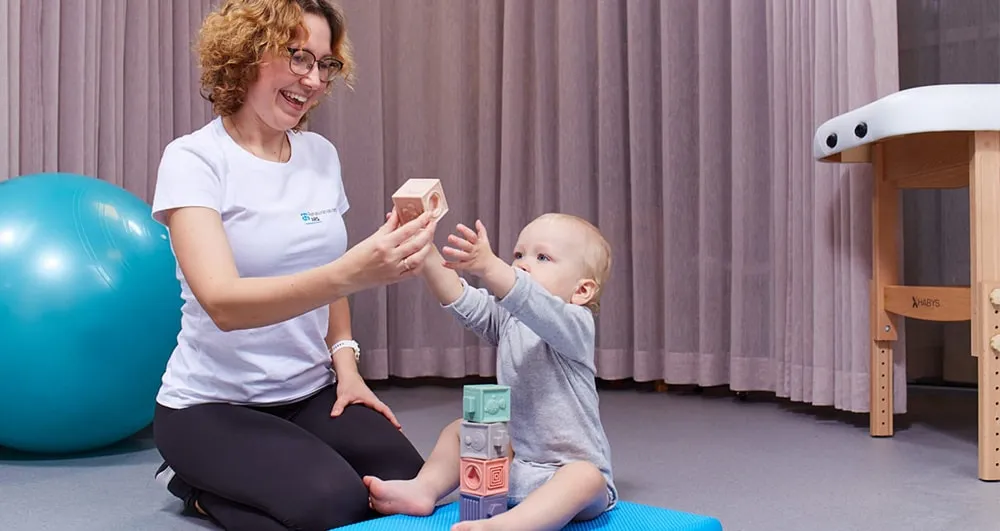
Pediatric physiotherapy is physiotherapy for babies, children and teenagers. Children are not small adults. Their bodies and brains are still growing, and they learn best through play. Pediatric physiotherapy uses fun, age appropriate activities to help children develop strength, balance, coordination and movement skills.
Early help matters. The first years of life are when the brain is most able to learn new movement patterns. If a child has a delay or a condition that affects movement, starting physiotherapy early can help them reach their full potential.
Who it helps
I work with children who have:
- Delayed milestones, such as not holding the head up, not sitting, crawling or walking at the expected age
- Cerebral palsy, which affects muscle tone, posture and movement
- Low muscle tone (a “floppy” baby) or general developmental delay
- Torticollis, where a baby keeps the head turned or tilted to one side
- Toe walking, flat feet or in-toeing that causes pain or frequent falls
- Fractures and surgery, to regain strength and movement afterwards
- Sports injuries and posture problems in school children who carry heavy bags or spend long hours on screens
Common signs you may need it
- Your baby does not hold their head steady by 4 months, or does not sit without support by 9 months
- Your child is not walking by 18 months
- Your child uses one side of the body much more than the other
- Your child seems very stiff or very floppy
- Your child falls much more often than other children of the same age
- Your child walks on their toes most of the time after age 3
- Your child complains of pain in the legs, feet or back during activity
Trust your instinct as a parent. If you are worried, an assessment can either reassure you or help you start the right support early.
How I help
Every child is unique, so I build each plan around the child’s needs and the family’s goals.
- Play based exercise: games and activities that build strength, balance and coordination
- Milestone training: helping a child learn to roll, sit, crawl, stand and walk, step by step
- Stretching and positioning: to reduce stiffness and support healthy posture
- Balance and coordination work: for running, jumping, climbing and sports
- Parent coaching: showing you how to handle, carry, position and play with your child to support development every day
- Advice on equipment: such as standing frames, walkers or footwear, when needed
I communicate with your pediatrician or other therapists so everyone works towards the same goals.
Your first session
The first session takes about 45 minutes. I talk with you about your pregnancy and birth, your child’s health, milestones and any reports. Then I watch your child play and move, and gently check their muscle tone, strength, joint movement and balance.
At the end, I explain what I found in simple words, answer your questions, and show you two or three activities to start at home.
How many sessions you may need
This depends very much on the child and the condition. A baby with mild torticollis may need only a few sessions with a home programme. A child with cerebral palsy may benefit from regular therapy over months or years, with goals reviewed often.
Most families start with one or two sessions a week. The home programme between sessions is where most of the progress happens, so I keep it short, simple and fun.
Frequently asked questions
At what age should my baby walk?
Most children take their first steps between 9 and 18 months. Every child is different. If your child is not walking by 18 months, or you are worried about how they move, it is a good idea to get an assessment.
Will my child find physiotherapy boring or scary?
I make sessions feel like play. I use toys, games, songs and fun challenges so the child enjoys moving. Parents stay with the child for the whole session.
Do I need a referral from a pediatrician?
You can contact me directly. If your child is under the care of a pediatrician or a pediatric neurologist, please bring their reports, as I like to work together with them.
How can I help my child at home?
Daily practice at home makes the biggest difference. I give you simple activities that fit into normal routines, like bath time, feeding and play, so practice happens every day without extra stress.
Conditions I treat with this
Related treatments
- Neurological Physiotherapy Neurological physiotherapy for stroke, Parkinson's disease, nerve injury and balance problems. Home visit neuro rehab across Ahmedabad by Dr. Meghna Oza.
- Post Surgery Rehabilitation Rehabilitation after knee or hip replacement, fracture surgery, ligament repair and spine surgery. Home visit physiotherapy across Ahmedabad by Dr. Meghna.
- Musculoskeletal Physiotherapy Physiotherapy for back pain, neck pain, shoulder pain, sciatica and sports injuries in Chandranagar, Ahmedabad. Practice, home and online sessions.
Trusted sources used for this page
- Cerebral palsy: treatment , NHS
- CDC developmental milestones , Centers for Disease Control and Prevention
- Rehabilitation fact sheet , World Health Organization
This page is general health information, not a diagnosis. Please see a doctor or physiotherapist for advice about your own condition. Read the medical disclaimer.