Health tip · 6 min read
Is My Baby Late to Sit or Walk? Milestones and When to Seek Help

Written and reviewed by Dr. Meghna Oza, B.PT
Published 7 October 2026. Last reviewed 8 October 2026.
Most babies hold their head steady by about 4 months, sit without support by about 9 months and walk by about 18 months, though every child develops at their own pace. If your child is late on these milestones, uses one side much more, or feels very stiff or floppy, a pediatric physiotherapy assessment can help.
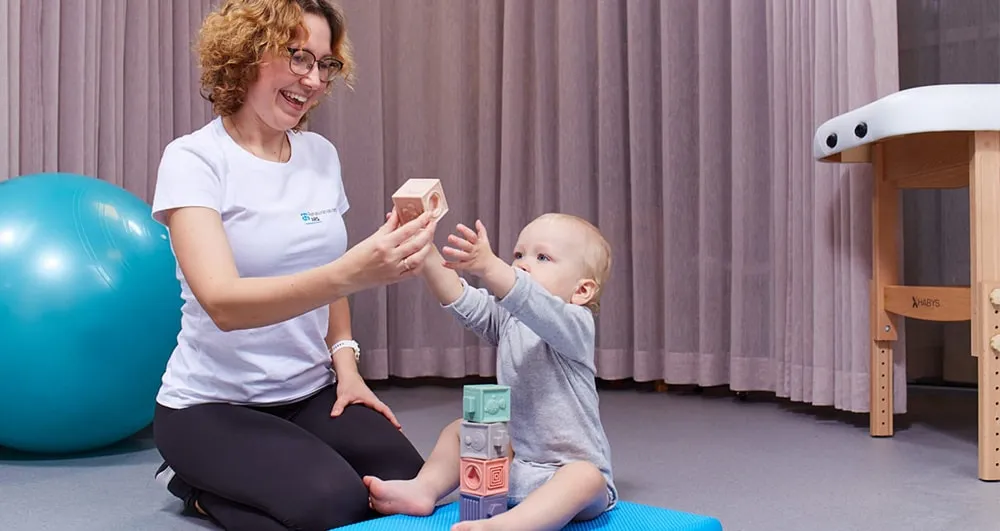
Every parent watches their baby’s first smile, first roll and first steps with excitement. And many parents also worry: “My neighbour’s baby is already sitting. Why isn’t mine?” or “My son is 15 months old and not walking yet. Should I be concerned?”
Children develop at their own pace, and there is a wide range of normal. But some signs do suggest a child may need extra support. This guide explains typical motor milestones, signs to watch for, and how pediatric physiotherapy can help.
What are motor milestones?
Motor milestones are physical skills that most children learn at roughly similar ages, such as holding up the head, rolling, sitting, crawling, standing and walking. Doctors use them as a guide to check that development is on track.
The ages below are based on milestone guidance from the US Centers for Disease Control and Prevention (CDC), which lists skills that most children (about 75 out of 100) can do by each age. This means many children reach them earlier, and some a little later.
Typical motor milestones
| By about | Most children can |
|---|---|
| 2 months | Hold the head up briefly when lying on their tummy, move both arms and legs |
| 4 months | Hold the head steady without support when held, push up onto elbows on the tummy |
| 6 months | Roll from tummy to back, lean on hands to support themselves when sitting |
| 9 months | Sit without support, get into a sitting position on their own |
| 12 months | Pull up to stand, walk while holding on to furniture |
| 15 months | Take a few steps on their own |
| 18 months | Walk without holding on to anyone or anything, climb on and off a sofa or chair |
| 2 years | Kick a ball, run, walk up a few stairs with or without help |
For babies born early, use the corrected age, counted from the original due date, especially in the first two years.
Signs that may need an assessment
Talk to your pediatrician, and consider a pediatric physiotherapy assessment, if your child:
- Does not hold their head steady by about 4 months
- Does not roll by about 6 months
- Does not sit without support by about 9 months
- Is not walking by 18 months
- Uses one hand or one side of the body much more than the other
- Feels very stiff, or very floppy, when you hold them
- Keeps their head turned to one side most of the time, or has a flat patch on one side of the head
- Walks on their toes most of the time after age 3
- Falls much more often than other children of the same age
- Loses a skill they could do before
Losing a skill they already had is always a reason to see a doctor promptly.
Common reasons for motor delay
- Prematurity: babies born early may reach milestones later
- Low muscle tone: a “floppy” baby may find it harder to hold positions
- Torticollis: tight neck muscles that make the baby turn the head to one side
- Cerebral palsy: a condition affecting muscle tone, movement and posture, caused by differences in the developing brain
- Genetic conditions, such as Down syndrome
- General developmental delay, where several areas of development are slower
- Limited floor time, for example when babies spend a lot of time being carried or in car seats and bouncers
Often, no single cause is found, and the child simply needs a little extra support.
How pediatric physiotherapy helps
Pediatric physiotherapy uses play to build strength, balance and coordination. Children learn best when they are having fun, so sessions are full of toys, songs and games.
Depending on your child’s needs, treatment may include:
- Tummy time and head control activities for young babies
- Rolling, sitting and crawling practice, with gentle support
- Standing and walking practice, at furniture and then independently
- Stretching and positioning for tight muscles, such as in torticollis
- Balance and coordination games for older children
- Parent coaching, so practice happens every day at home
How parents can help at home
- Tummy time: from the first weeks, give your baby supervised tummy time while awake, building up a little each day.
- Floor play: a safe mat on the floor lets babies practise rolling, reaching and crawling.
- Limit time in devices: reduce time in bouncers, swings and car seats when not travelling.
- Avoid baby walkers: they do not help walking and carry a risk of falls.
- Barefoot time: walking barefoot on safe surfaces helps balance and foot strength.
- Play together: reaching for toys, crawling through cushions and cruising along the sofa are all great practice.
What happens at the first assessment?
The first session usually takes about 45 minutes. I talk with you about pregnancy, birth, your child’s health and the milestones they have reached. Then I watch your child play and move, and gently check muscle tone, strength, joint movement and balance. I explain what I find in simple language and show you a few activities to start at home. If anything needs a doctor’s opinion, I will tell you and help you plan the next step with your pediatrician.
Fun play ideas that build motor skills
- For babies: tummy time on a mat with a mirror or bright toys in front, gently encouraging reaching and rolling
- For crawlers: cushion obstacle courses, tunnels made from a bedsheet over chairs, and rolling a ball back and forth
- For new walkers: pushing a sturdy, weighted toy cart, cruising along a sofa, and walking to a parent with arms out
- For toddlers: climbing onto low steps with help, kicking a large soft ball, and dancing to music
- For older children: hopscotch, jumping on the spot, balancing along a line on the floor, and playground climbing
Play like this, a little every day, supports the skills your child needs next.
When to see a physiotherapist
Book an assessment if:
- Your child is behind on one or more of the milestones in the table above
- You notice your child uses one side much more than the other
- Your baby has a strong head turn to one side or a flat patch on the head
- Your child walks on tiptoes or falls very often
- You simply have a feeling that something is not right
Trust your instinct. An assessment either reassures you or helps you start support early.
Warning signs that need a doctor
See your pediatrician promptly if your child:
- Loses skills they could do before
- Has seizures or unusual movements
- Is very floppy and feeds poorly
- Has a sudden limp, refuses to walk or has a painful, swollen joint
- Has fever with unusual drowsiness or a stiff neck (seek urgent care)
Key points to remember
- Children develop at their own pace, within a wide normal range.
- Most children sit without support by about 9 months and walk by about 18 months.
- Using one side much more, very stiff or floppy muscles, or losing skills are reasons to seek help.
- Daily floor play and tummy time support healthy motor development.
- Early, play based physiotherapy helps children who need extra support.
The bottom line
Children develop at their own pace, but early support can make a real difference when a child is behind. Play based physiotherapy, with parents as partners, helps children build strength, balance and confidence. If you are in Ahmedabad and have concerns about your child’s movement, I am happy to assess your child at my Chandranagar practice or at home.
Frequently asked questions
My baby skipped crawling. Is that a problem?
Some babies skip crawling and move by bottom shuffling or go straight to standing and walking. On its own, this is often not a concern. If you have other worries about how your baby moves, an assessment can reassure you.
Are baby walkers good for learning to walk?
Baby walkers are not recommended. They do not help children learn to walk and carry a risk of falls and injuries, especially near stairs. Floor play and supervised standing at furniture are better.
My baby was born early. Should I expect delays?
Doctors usually use the corrected age for premature babies, which is their age counted from the original due date. Discuss your baby's milestones with your pediatrician using corrected age.
How long does pediatric physiotherapy take?
It depends on the child and the cause of the delay. Some children need only a few sessions and a home programme, others benefit from regular therapy over months.
How I can help
Read next
- Your First Physiotherapy Session: What to Expect What happens at your first physiotherapy appointment, what to wear and bring, how long it takes and what questions to ask. A simple guide from Ahmedabad.
- Home Visit Physiotherapy in Ahmedabad: How It Works Who home physiotherapy is for, what happens at a home visit, which areas of Ahmedabad are covered and how to prepare. A clear guide from Dr. Meghna Oza.
- Common Running and Cricket Injuries, and How to Prevent Them Runner's knee, shin pain, hamstring strains, shoulder and back injuries in cricket. Causes, first aid, prevention and rehab from an Ahmedabad physiotherapist.
Trusted sources used for this page
- CDC developmental milestones , Centers for Disease Control and Prevention
- Cerebral palsy: treatment , NHS
This page is general health information, not a diagnosis. Please see a doctor or physiotherapist for advice about your own condition. Read the medical disclaimer.